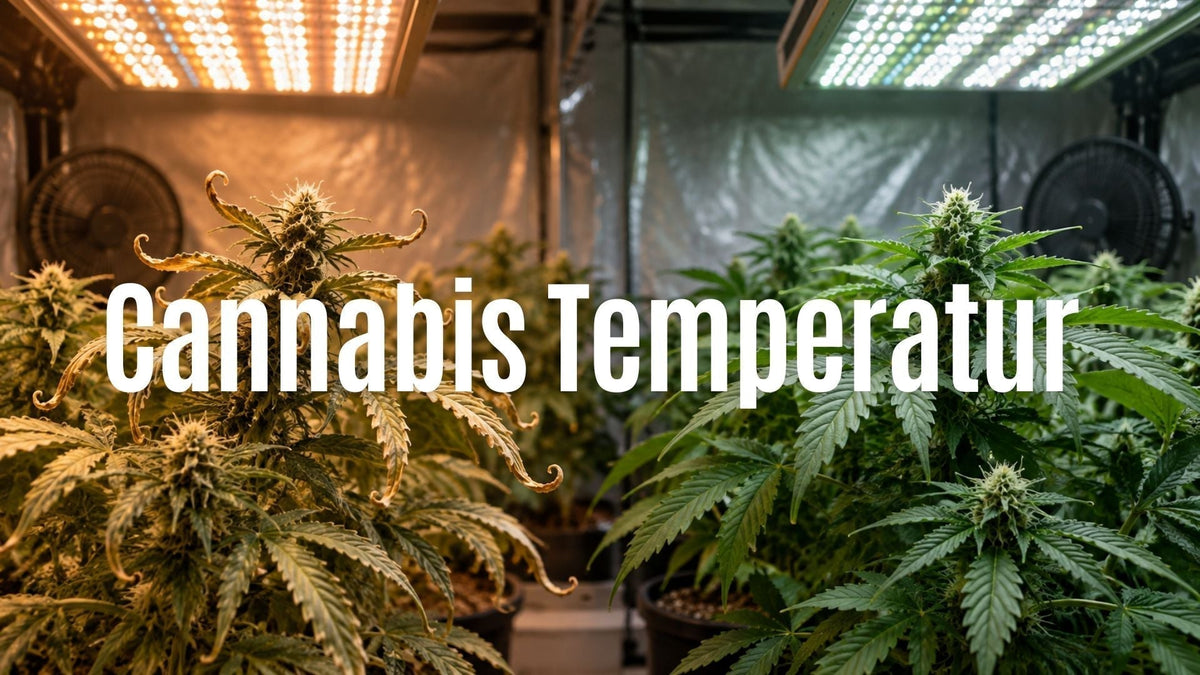

Temperature is one of the most critical environmental parameters in cannabis cultivation. It directly regulates photosynthesis, enzyme activity, nutrient uptake, transpiration, and cannabinoid synthesis. If temperatures deviate too far above or below the optimal range, plant metabolism slows, growth stalls, and susceptibility to pests and mold escalates dramatically.
At the same time, different developmental phases require different temperature settings: what is optimal for germination or vegetative growth may prove problematic during late flowering. In this comprehensive guide, you will learn the ideal temperature ranges for each growth stage, the importance of day/night differentials, how to balance heat with relative humidity (VPD), and practical tips for home cultivators in Germany.
Table of Contents
- Why Is Temperature Crucial in Cannabis Cultivation?
- Key Benefits of Maintaining Optimal Growing Temperatures
- Optimal Cannabis Temperatures by Growth Stage
- Temperature During Germination
- Temperature for Seedlings and Young Plants
- Temperature in the Vegetative Growth Phase
- Temperature in the Flowering Phase
- Day vs. Night Temperatures: How Large Should the Difference Be?
- What Happens When Temperatures Are Too High?
- What Happens When Temperatures Are Too Low?
- Balancing Temperature and Humidity (VPD)
- Indoor vs. Outdoor: Where Is Climate Better Controlled?
- How to Monitor and Control Temperature in Indoor Grows
- Is Cannabis Cultivation Legal in Germany?

Why Is Temperature Crucial in Cannabis Cultivation?
Cannabis is a warm-season botanical plant whose physiological processes are directly temperature-dependent. Plant enzymes responsible for converting water, light, and carbon dioxide into sugars and plant tissue function efficiently only within a specific thermal corridor.
Temperature also governs root activity and transpiration. If the grow room is excessively cold, roots cannot absorb phosphorus and other key nutrients. If the environment is too hot, the plant closes its stomata to conserve water, halting CO2 uptake and photosynthetic growth.
Key Benefits of Maintaining Optimal Growing Temperatures
Precise climate control provides measurable cultivation advantages:
1. Uniform, Vigorous Plant Development
Balanced thermal conditions allow uniform cell elongation, strong stalk formation, and balanced internodal spacing.
2. Optimal Photosynthetic Efficiency
Enzymes operate at peak velocity, maximizing daily biomass production and light energy conversion.
3. Predictable Water and Nutrient Uptake
Transpiration flows smoothly without causing root lockouts, nutrient burn, or salt buildup in the substrate.
4. Minimized Thermal Stress
Prevents leaf curling, foxtailing, and stress-induced hermaphroditism.
5. Superior Terpene and Cannabinoid Preservation in Bloom
Excessive heat above 26 °C volatilizes delicate terpenes (like pinene and myrcene). Controlled cooler temperatures during late bloom preserve rich aroma profiles and prevent dense bud rot.
Optimal Cannabis Temperatures by Growth Stage
Growth Stage |
Day Temperature |
Night Temperature |
Target Humidity (RH) |
Germination |
22 °C – 26 °C |
20 °C – 22 °C |
70% – 85% |
Seedling / Early Veg |
22 °C – 25 °C |
18 °C – 21 °C |
60% – 70% |
Vegetative Phase |
24 °C – 28 °C |
19 °C – 22 °C |
50% – 60% |
Early/Mid Flowering |
22 °C – 26 °C |
18 °C – 21 °C |
40% – 50% |
Late Flowering (Ripening) |
20 °C – 24 °C |
16 °C – 19 °C |
35% – 45% |
Temperature During Germination
Cannabis seeds germinate best in a warm, moist microclimate of 22 °C to 26 °C. Cold soils below 18 °C cause seeds to rot before emerging, while heat above 30 °C damages fragile taproots. Using a heat mat with thermostat control under a humidity dome guarantees rapid germination within 48 to 96 hours.


Temperature for Seedlings and Young Plants
Young seedlings have delicate, shallow root systems and absorb much of their moisture from the air through leaves. Maintain ambient temperatures around 22–25 °C with elevated relative humidity (65–75% RH) to avoid seedling desiccation.
Temperature in the Vegetative Growth Phase
During vegetative growth, cannabis thrives in robust summer-like conditions: 24 °C to 28 °C under intense LED lighting. Higher temperatures in this phase accelerate stem, leaf, and node development, provided adequate watering and ventilation are maintained.
Temperature in the Flowering Phase
During flowering, temperatures should be gradually stepped down to 22–25 °C, and finally to 20–23 °C during the last two weeks of ripening.
Lower temperatures prevent volatile terpene evaporation, promote tight and dense calyx clusters, and reduce the risk of Botrytis (bud rot). Cooler night temperatures (17–19 °C) during the final flush also stimulate vibrant purple, red, or dark violet anthocyanin pigments in genetically predisposed strains.
Day vs. Night Temperatures: How Large Should the Difference Be?
A natural day-to-night temperature drop of approximately 4 °C to 6 °C is optimal.
If night temperatures drop by more than 8–10 °C, plants experience thermal shock, causing slow nutrient uptake and excessive internodal stretching. Conversely, keeping temperatures completely identical day and night disrupts circadian rhythms and natural transpiration.
What Happens When Temperatures Are Too High?
Persistent temperatures exceeding 29–30 °C trigger acute heat stress symptoms:
- Upward taco-curling of leaf margins
- Bleached flower tops and airy, fluffy buds (foxtailing)
- Evaporation of fragrant monoterpenes
- Rapid moisture depletion in the substrate
Countermeasures: Increase exhaust fan extraction speed, raise LED fixture height, increase oscillating air circulation, or lower grow room ambient intake.
What Happens When Temperatures Are Too Low?
Temperatures dropping below 17 °C during lights-on or below 15 °C at night cause metabolic stagnation:
- Extremely slow growth and delayed flowering onset
- Phosphorus and magnesium lockouts visible as purple/red leaf petioles
- Waterlogged roots because soil dries too slowly
- Dangerous condensation spikes when lights go off, inviting gray mold
Balancing Temperature and Humidity (VPD)
Temperature and relative humidity are inextricably linked through Vapor Pressure Deficit (VPD). Warmer air holds significantly more water vapor than cooler air.
Monitoring both metrics together ensures that leaves transpire water and nutrients at a steady, healthy rate without drying out or stalling transpiration.
Indoor vs. Outdoor: Where Is Climate Better Controlled?
Indoor Cultivation
Allows near-complete climate control via exhaust fans, speed controllers, heating mats, and AC units. You dictate the exact thermal regime regardless of outdoor weather.
Outdoor Cultivation
Dependent on natural seasonal temperatures. In Central Europe, cold, wet autumns often force early harvests to escape frost and mold. Choosing mold-resistant, fast-flowering outdoor genetics is paramount.
How to Monitor and Control Temperature in Indoor Grows
Essential climate monitoring equipment includes:
- Digital Thermo-Hygrometer with Min/Max memory to track day/night peaks.
- Multiple sensors: one placed at canopy level, one in the shade, and one near root pots.
- Adjustable exhaust ventilation to continuously extract hot lamp air.
- Oscillating circulation fans to eliminate stagnant heat pockets above the canopy.


Is Cannabis Cultivation Legal in Germany?
Yes, under the German Cannabis Act (KCanG), adults in Germany are legally permitted to cultivate up to three flowering female cannabis plants simultaneously for personal use.
Commercial growing or selling without specific medical licensing remains illegal. Home cultivation must be protected against access by minors and third parties, and harvests are limited to a maximum personal possession limit of 50 grams of dried cannabis per adult in private residences.
Official German Legal References:
§ 4 KCanG – Handling of Cannabis Seeds
Sources and References
3
Scientific references, official statements, and legal frameworks for this article:
-
Konsumcannabisgesetz (KCanG) – § 4 Umgang mit Cannabissamen Law / Regulation
-
Konsumcannabisgesetz (KCanG) – Vollständiger Gesetzestext Law / Regulation
Frequently Asked Questions (FAQ)
What temperature is optimal when growing cannabis?
What temperature do cannabis seeds need for germination?
What temperature should cannabis plants have at night?
This article is provided for general informational purposes only and does not constitute legal, tax or medical advice. For individual questions, please consult a qualified professional. Laws and regulations may change – please always check the currently applicable legal requirements.