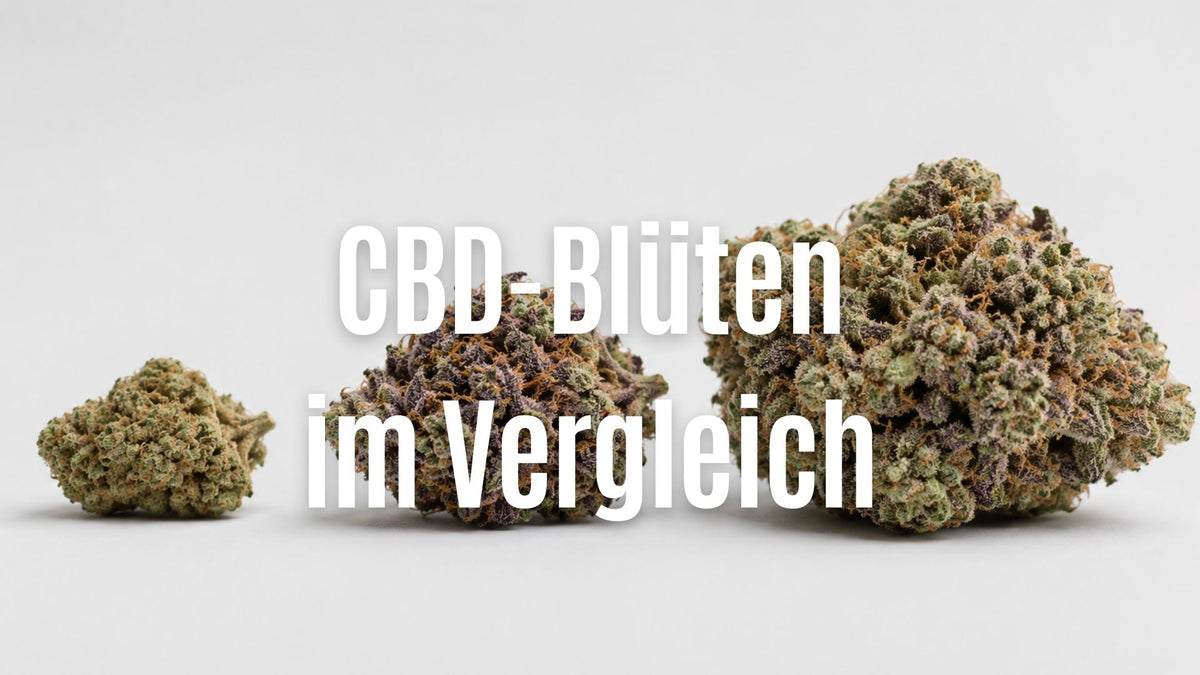

Price differences in the CBD flower market can be substantial. While budget-friendly options such as small buds or greenhouse batches are available for a few euros per gram, premium indoor selections and coveted “Cali” strains command significantly higher prices.
For consumers, this raises essential questions: What factors truly justify higher price points? Does a higher price automatically guarantee superior quality, higher cannabinoid density, or a more intense terpene profile? And when does choosing budget CBD flowers make good practical sense?
In this guide, we analyze the structural differences between budget, premium, and Cali CBD flowers, explaining cultivation methods, bud morphology, trimming standards, and quality indicators to look for before buying.
Table of Contents
- What Distinguishes Budget CBD Flowers from More Expensive Buds?
- What Defines Premium CBD Flowers?
- What Does “Cali” Mean for CBD Flowers?
- Is Cali Automatically Superior to Premium?
- Does High CBD Percentage Guarantee Superior Quality?
- Why Does Terpene Aroma Play Such a Crucial Role?
- Indoor, Greenhouse, or Outdoor: Does It Make a Real Difference?
- Why Are Small CBD Buds Frequently Cheaper?
- How to Recognize High-Quality CBD Flowers
- Who Are Budget CBD Flowers Best Suited For?
- Legal Notice Regarding CBD Flowers in Germany

What Distinguishes Budget CBD Flowers from More Expensive Buds?
The price difference between budget and high-end CBD flowers is driven by distinct production factors: cultivation environment, plant genetics, harvest labor, trimming methods, and curing duration.
Budget flowers frequently originate from large-scale outdoor agriculture or simplified greenhouse setups. In these setups, production costs per gram are substantially lower, and automated mechanical trimming is commonly utilized. The resulting flowers may contain smaller bud fragments, minor sugar leaf remnants, and a milder aroma profile.
Higher-priced flowers, by contrast, are typically grown in climate-controlled indoor cleanrooms with dedicated LED spectrums, precise humidity management, and meticulous hand-trimming followed by weeks of controlled cold curing.
What Defines Premium CBD Flowers?
Premium CBD flowers are characterized by intact morphology, dense flower calyxes, rich trichome density, and a clean, pronounced terpene profile.
Key characteristics of genuine premium CBD flowers include:
- Cultivation: Fully controlled indoor facilities providing optimal light, climate, and nutrition.
- Trimming: Careful hand-trimming that preserves delicate trichome heads while removing excess leaf stems.
- Curing: Gentle, slow curing that breaks down residual chlorophyll without degrading volatile aromatic terpenes.
- Moisture Level: Perfect bounce and elasticity with relative water activity stabilized between 0.55 and 0.65—neither crumbly dry nor spongy moist.
- Lab Testing: Complete third-party analytical reports verifying cannabinoid ratios and absence of pesticides, heavy metals, or mold.
What Does “Cali” Mean for CBD Flowers?
In the modern hemp industry, “Cali” references genetics, breeding standards, and visual aesthetics pioneered in California's high-end dispensary culture.
When applied to legal European CBD flowers, “Cali CBD” indicates European-grown hemp cultivated using American exotic genetic lineages, characterized by ultra-dense flower structures, complex dessert or gas aroma profiles (e.g., gelato, cookies, zkittlez notes), and vibrant colorations with purple or orange pistils.
It is important to understand: Legal Cali CBD flowers sold in Germany are not imported from California (which would violate narcotics import laws). They are grown legally in Europe under EU industrial hemp standards utilizing modern exotic genetics.
Is Cali Automatically Superior to Premium?
Not necessarily. While the “Cali” tag commands a pricing premium and often features exceptional bag appeal and sweet, exotic terpene profiles, traditional European premium indoor flowers can match or exceed them in smoothness and purity.
Occasionally, the “Cali” label is used purely as marketing hype to mark up standard indoor flowers in decorative mylar packaging. Buyers should look beyond flashy bags and examine the actual flower quality, aroma, and third-party laboratory analysis.
Does High CBD Percentage Guarantee Superior Quality?
No. A high natural CBD percentage is desirable, but it is not the sole determinant of flower excellence. In fact, unusually high CBD claims on raw flowers should be viewed with extreme skepticism.
In natural, non-manipulated industrial hemp, the natural ratio between CBD and THC typically ranges around 25:1 to 30:1. Because statutory German law strictly mandates a maximum THC threshold of 0.2% (or 0.3% under updated EU catalogs), naturally grown CBD flowers typically contain between 4% and 9% natural CBD.
Raw flowers advertised with 20%, 30%, or 40% CBD without distillation or hash processing have almost always been artificially altered—either sprayed with synthetic CBD isolate or treated with solvent washes. Natural terpene richness and clean combustion are far more valuable than artificial cannabinoid inflation.


Why Does Terpene Aroma Play Such a Crucial Role?
Terpenes are natural aromatic hydrocarbons synthesized within the plant’s glandular trichomes alongside cannabinoids. They produce the characteristic olfactory signatures of citrus (limonene), pine (pinene), earth/herbs (myrcene), or spice (caryophyllene).
In high-end flowers, a vibrant and multidimensional aroma indicates fresh trichomes, gentle curing, and proper storage. Flowers that smell grassy, musty, or like wet hay have either been cured too fast, dried improperly, or aged past their prime.
Indoor, Greenhouse, or Outdoor: Does It Make a Real Difference?
The cultivation environment directly influences physical appearance, terpene concentration, and manufacturing costs:
- Indoor: Complete environmental control over light, temperature, humidity, and CO2. Delivers maximum trichome preservation, dense buds, pristine aesthetics, and intense aromas, but requires high energy input.
- Greenhouse: Harnesses natural sunlight supplemented with artificial lights and climate shutters. Offers an excellent compromise between high quality, natural terpene depth, and sustainable energy costs.
- Outdoor: Grown under open skies. Most eco-friendly and cost-effective, but vulnerable to weather fluctuations, dust, and insects. Buds are often darker, less dense, and feature higher leaf ratios.
Why Are Small CBD Buds Frequently Cheaper?
“Small Buds” (or popcorn buds) are smaller flower clusters that grow on lower plant branches beneath the primary upper canopy colas.
Because they receive less direct light, they develop into compact, marble-sized nuggets rather than large, impressive showcase buds. Chemically, small buds from the same harvest batch often possess identical terpene and cannabinoid ratios to large top colas.
For budget-conscious consumers who prioritize cost-efficiency and grind their flowers anyway, small buds represent one of the smartest value choices in the CBD market.
How to Recognize High-Quality CBD Flowers
Before making a purchase, evaluate these five decisive quality checkpoints:
1. Examine Genetics and Provenance
Look for transparent strain lineage derived from approved EU industrial hemp varieties. Reputable vendors specify the exact genetics and cultivation origin.
2. Inspect Flower Morphology
Quality buds are compact, well-structured, and coated in glistening trichome crystals. Avoid brownish, brittle, or excessively leafy material.
3. Check Processing & Trim
Look for clean, tight trimming that removes thick woody stems and protruding leaves without shaving away the external trichome heads.
4. Read Independent Lab Reports
Verify that the batch has an accredited third-party Certificate of Analysis confirming statutory THC compliance (< 0.2%) and pure cannabinoid profiles.
5. Assess Realistic Pricing
Legitimate, indoor-grown, hand-trimmed flowers require substantial skilled labor. Extremely cheap offers often indicate aged clearance stock, while exorbitant prices frequently reflect branding markups.


Who Are Budget CBD Flowers Best Suited For?
Budget CBD flowers (such as outdoor selections, greenhouse batches, or small buds) are ideal for consumers seeking maximum value, everyday botanical crafting, extraction experiments, or individuals who value affordability over photogenic bag appeal.
Premium and Cali selections cater to connoisseurs who prioritize exotic terpene nuance, immaculate aesthetics, and top-shelf boutique curing.
Legal Notice Regarding CBD Flowers in Germany
In Germany, CBD flowers are subject to strict regulatory conditions:
Under § 1 Nr. 9 of the German Cannabis Act (KCanG), industrial hemp materials are exempt from narcotics classification only if they originate from certified EU seed catalogs, their total THC content does not exceed 0.2% (or 0.3%), and any misuse for intoxication purposes is excluded.
Official guidance regarding industrial hemp, THC, and CBD regulations is provided by the German Federal Office of Consumer Protection and Food Safety (BVL):
BVL – Hanf, THC, Cannabidiol (CBD) & Co.
CBD flowers at CANNANA are commercial raw materials and botanical specimens intended for decorative, technical, and aromatic use, and are strictly not for consumption or smoking. This guide provides general informational content and does not constitute legal or medical advice.
Sources and References
2
Scientific references, official statements, and legal frameworks for this article:
-
Konsumcannabisgesetz (KCanG) – § 1 Begriffsbestimmungen Law / Regulation
Frequently Asked Questions (FAQ)
Are budget CBD flowers lower in quality?
What is the difference between budget and premium CBD flowers?
What does "Cali" mean for CBD flowers?
This article is provided for general informational purposes only and does not constitute legal, tax or medical advice. For individual questions, please consult a qualified professional. Laws and regulations may change – please always check the currently applicable legal requirements.