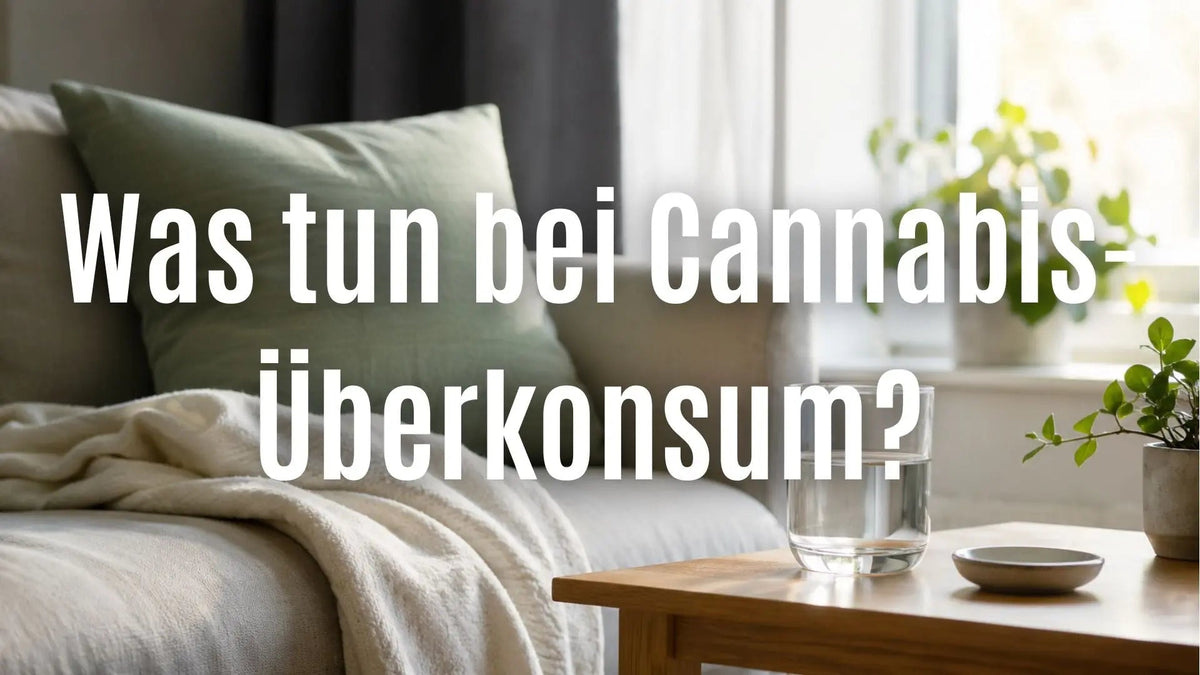

A Green Out is an unpleasant acute reaction to too much THC-containing cannabis. Typical signs include nausea, dizziness, rapid heart rate, tremors, severe fatigue, anxiety, panic, or paranoid thoughts. In most cases, a Green Out subsides, but the affected person needs rest, security, and observation.
Important: This article does not replace medical advice. In cases of unconsciousness, breathing problems, chest pain, seizures, severe confusion, persistent panic, self-harm, or if a child has ingested cannabis, immediately call the emergency number 112.
Table of Contents
- Green Out Meaning: What happens with cannabis overconsumption?
- Green Out Symptoms: How to recognize cannabis overconsumption?
- First Aid for Green Out: What helps in the first few minutes?
- Emergency Signs of Cannabis Overconsumption: When to call 112?
- Edibles and Green Out: Why edible cannabis can be riskier
- Polysubstance Use with Alcohol: Why Green Out becomes more likely
- CBD for Green Out: Does CBD really help against too much THC?
- Green Out in Children and Adolescents: Why special caution is required
- After a Green Out: What should you do the next day?
- Preventing Green Out: How to avoid cannabis overconsumption?
- Short Answer: What to do with too much cannabis?

Green Out Meaning: What happens with cannabis overconsumption?
A Green Out describes an overwhelmed state due to THC, the intoxicating compound in cannabis. THC can affect perception, coordination, sense of time, heart rate, thinking, and emotions. If the effect is stronger than expected, a high can quickly turn into an unpleasant state with anxiety, nausea, or loss of control.
A Green Out is not an official medical diagnostic term. Medically, the condition more closely resembles acute cannabis intoxication or a strong adverse reaction to cannabis. Nevertheless, the term is helpful because many consumers search for it precisely when they suddenly feel "too high."

Green Out Symptoms: How to recognize cannabis overconsumption?
Cannabis overconsumption often manifests physically and psychologically simultaneously. Physical symptoms include nausea, vomiting, dizziness, dry mouth, tremors, weakness, pallor, palpitations, or a strongly altered body sensation. Psychological symptoms include anxiety, panic, paranoia, confusion, depersonalization/derealization, or the feeling of losing control.
The combination of a racing heart and anxiety is particularly distressing. Many affected individuals interpret palpitations as a danger, which intensifies the panic. In such cases, a calm companion who clearly states, "You've taken too much THC. The effect is unpleasant, but it will pass. We'll stay here and observe you," can be helpful.
First Aid for Green Out: What helps in the first few minutes?
In case of a Green Out, the affected person should immediately stop consumption, go to a quiet place, and not be left alone. A trusted person should speak reassuringly, reduce bright lights, loud music, and social overstimulation. The affected person should sit or lie down and breathe slowly.
Practical First Aid:
- Do not consume any more cannabis.
- Do not consume alcohol or any other substances afterwards.
- Move to a calm, safe environment.
- Drink small sips of water.
- If nauseous or vomiting, lie on your side.
- Breathe slowly: inhale for four seconds, exhale for six seconds.
- Note the time so it's clear when the effect began.
- A sober person stays with them and monitors the symptoms.
The most important measure is safety. Cannabis overconsumption is not resolved faster by frantic countermeasures. The affected person needs time, rest, and protection from injury, re-dosing, and panic spirals.

Emergency Signs of Cannabis Overconsumption: When to call 112?
In severe cases, cannabis overconsumption is a medical emergency. Calling emergency services (112) is appropriate if the person becomes unconscious, has difficulty breathing, is unresponsive, experiences seizures, has severe chest pain, poses a danger to themselves, is extremely confused, or can no longer be safely cared for.
Medical help should also be sought earlier for children, adolescents, pregnant women, older individuals, or people with cardiovascular diseases. If it is unclear what was consumed, how much THC was contained, or whether alcohol, medications, or other drugs were involved, professional help is safer than waiting.
In case of suspected poisoning, a regional poison control center can also be contacted. In Germany, there are several poison information centers that advise on suspected poisoning. In life-threatening situations, always call 112 first.

Edibles and Green Out: Why edible cannabis can be riskier
Edibles can more easily lead to a Green Out because the effects are delayed. With smoked or vaped cannabis, many people notice the effects faster. With ingested or drunk cannabis, it can take significantly longer for the effects to become noticeable. This is precisely why a typical mistake occurs: one thinks the first portion isn't working, takes more, and later experiences an overly strong effect.
Another risk factor is the long duration. Edible cannabis can have a longer and more unpredictable effect than inhaled consumption. Therefore, after cannabis overconsumption, never "re-dose for calm." More THC usually prolongs the situation instead of improving it.
For Germany, it is also important: THC-containing edibles such as gummies or cookies remain particularly problematic under German regulations and should not be treated like normal foodstuffs. Cannabis products must be consistently protected from children, adolescents, and pets.

Polysubstance Use with Alcohol: Why Green Out becomes more likely
Polysubstance use increases the risk of unpleasant and difficult-to-assess reactions. Alcohol, medications, or other drugs can alter the effects of cannabis and intensify side effects. Alcohol, in particular, can promote nausea, dizziness, loss of control, and risky behavior.
In the event of a Green Out, therefore, nothing additional should be consumed. No "calming drinks," no further cannabis products, no sleeping pills without medical instruction, and no experiments with other substances. The safest decision is: stop, observe, seek help if warning signs appear.
CBD for Green Out: Does CBD really help against too much THC?
CBD should not be presented as a reliable antidote for cannabis overconsumption. Some guides recommend CBD because CBD is not intoxicating and may potentially influence individual THC effects. However, official first-aid recommendations do not rely on CBD as an emergency measure, but rather on rest, observation, fluids, safe positioning, and medical help for warning signs.

Green Out in Children and Adolescents: Why special caution is required
If a child or adolescent has ingested cannabis, professional help should be contacted immediately. Children can accidentally eat cannabis products, especially if edibles look like sweets. Possible warning signs include severe fatigue, difficulty sitting or walking, vomiting, confusion, or breathing problems.
Cannabis is prohibited for minors in Germany. The reason is not only legal but also health-related: the brain continues to develop until young adulthood, and THC can endanger young people more. Cannabis products should therefore be stored locked, out of sight, and out of reach of children, adolescents, and pets.

After a Green Out: What should you do the next day?
After a Green Out, the affected person should not drive, operate machinery, or make risky decisions for at least the rest of the day. Fatigue, slowed reactions, uncertainty, or anxiety can persist even after the strongest feelings of being high subside.
A quick check the next day is useful:
- What was consumed?
- How much was consumed?
- Was alcohol or anything else involved?
- Was it an edible, concentrate, or a very high-THC product?
- Was the dosage increased too quickly?
- Was there panic, memory loss, or loss of control?
If cannabis regularly leads to anxiety, panic attacks, loss of control, or problems in daily life, a break or professional counseling is advisable. Especially with repeated Green Outs, the goal is not to "power through better," but to clearly reduce the risk.
Preventing Green Out: How to avoid cannabis overconsumption?
Cannabis overconsumption can best be avoided by using low THC amounts, refraining from polysubstance use, and patiently waiting. Especially with new products, unknown potency, longer breaks from consumption, or edibles, caution is important. Those prone to anxiety, panic attacks, or psychological crises should be particularly critical of THC or avoid it entirely.
Practical Prevention:
- Do not consume on an empty stomach.
- Do not consume alone if unsure.
- Do not use unknown products.
- Do not mix with alcohol or other substances.
- With edibles, wait especially long and do not prematurely re-dose.
- Avoid high-THC concentrates if you have little experience.
- Store cannabis safely and out of reach of children.
- Do not drive after consumption.
The best Green Out strategy is not immediate help, but rather preventing the situation. If you don't know your own limit, you shouldn't try to find it by taking a high dose.
Short Answer: What to do with too much cannabis?
If you've consumed too much cannabis: stop consuming, stay calm, drink water in small sips, go to a safe place, don't be alone, and don't take any other substances. If nauseous or vomiting, lie on your side. In cases of unconsciousness, breathing problems, chest pain, seizures, severe confusion, self-harm, or cannabis ingestion by children, immediately call 112.
Important sources for linking in the article:
The data portal of the Federal Drug Commissioner states that for Germany in 2024, there were over 2,500 inpatient treated cases due to acute intoxications or poisonings with cannabinoids and no recorded deaths as a direct consequence of a cannabis overdose. (https://datenportal.bundesdrogenbeauftragter.de/cannabis)
The CDC explains that edibles can take 30 minutes to 2 hours to take effect, can last longer than expected, and pose a poisoning risk due to unclear THC potency. (https://www.cdc.gov/cannabis/health-effects/poisoning.html)
The BMG points out that THC-containing edibles remain prohibited in Germany, shipping/online sales of cannabis remain prohibited, and cannabis remains prohibited for minors. (https://www.bundesgesundheitsministerium.de/themen/cannabis/faq-cannabisgesetz)
Health Canada recommends not combining cannabis with alcohol or other intoxicating substances, storing cannabis safely away from children and pets, and not driving under the influence of cannabis. (https://www.canada.ca/en/health-canada/services/drugs-medication/cannabis/laws-regulations/regulations-support-cannabis-act/consumer-information.html)