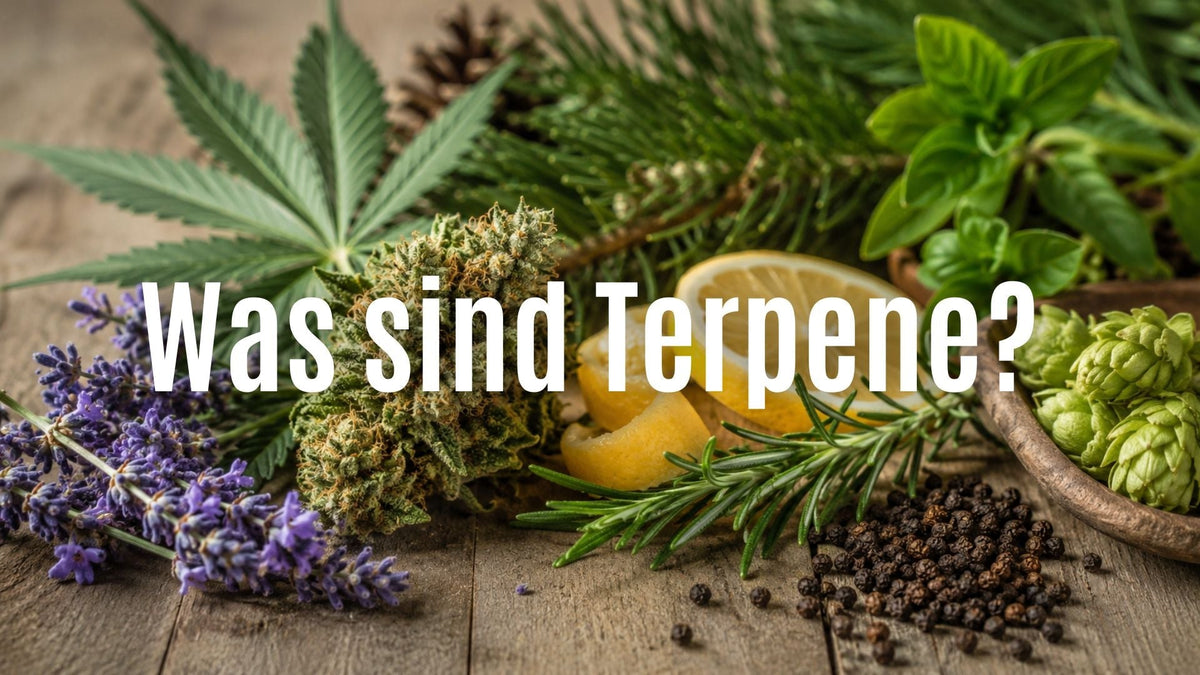

Terpenes are natural aroma compounds that give plants their characteristic scent and taste. In hemp products, terpenes define a strain's aroma, the flavor profile when vaping, and the initial impression of quality when opening the packaging. Limonene smells more citrusy, myrcene more spicy-earthy, pinene is reminiscent of pine, and linalool of lavender.
Therefore, in CBD flowers, CBD vapes, and hemp extracts, terpenes are more than just a scent detail. Terpenes help you compare products more effectively. A good terpene profile indicates whether a product is fresh, aromatic, and carefully processed. However, a guaranteed medical effect cannot be derived from individual terpenes.
Table of Contents
- What are Terpenes?
- Why are Terpenes Important in Cannabis and CBD Products?
- Limonene: The Citrusy Terpene
- Myrcene: The Earthy-Spicy Terpene
- Pinene: Terpenes with Pine Scent
- Linalool: Floral Notes like Lavender
- Caryophyllene: Peppery and Spicy Aromas
- Terpene Effects: What's Proven and What's Marketing?
- Reading a Terpene Profile: What Buyers Should Look For
- Proper Terpene Storage
- Terpenes, Strain Names, and Indica/Sativa Promises
- Terpenes in CBD Flowers, CBD Oils, and Vapes
- Overview of the Most Important Terpenes
- How to Choose a CBD Product with a Good Terpene Profile
- Conclusion: Terpenes as an Aroma, Profile, and Quality Feature

What are Terpenes?
Terpenes are organic plant compounds, particularly common in essential oils. In hemp, terpenes are mainly found in the trichomes, which are the small resin glands on the flower. Cannabinoids like CBD, CBG, or THC are also produced there.
The most important function of terpenes in nature is not wellness, but plant protection and communication. Plants use terpenes to repel pests, attract pollinators, or respond to environmental stress. For humans, terpenes are primarily perceptible through smell and taste: citrus peel, lavender, pine, rosemary, hops, pepper, and cannabis largely owe their scent to terpenes.
For CBD products, this means: terpenes explain why two flowers with similar CBD content can smell completely different. The CBD value alone says little about aroma, freshness, and product experience.


Why are Terpenes Important in Cannabis and CBD Products?
Terpenes give cannabis and CBD products their individual aroma. A CBD flower can smell sweet, citrusy, spicy, earthy, herbaceous, or resinous because different terpenes are present in different amounts.
With hemp products, often only the CBD content is considered. This is too narrow a view for product quality. A CBD product with a clean cannabinoid profile, a recognizable terpene profile, and a fresh aroma appears more transparent than a product that only advertises a high CBD percentage.
Practically, this means: when choosing CBD flowers or other hemp products, you should not only look at percentages. Laboratory analyses, batch transparency, smell, packaging, storage, and the question of whether the product has a naturally aromatic effect or smells artificially perfumed are also important.

Limonene: The Citrusy Terpene
Limonene is a terpene with a citrusy scent and is notably found in lemon, orange, and other citrus peels. In hemp products, limonene is often associated with a fresh, bright, and fruity aroma.
Many guides quickly describe limonene as "mood-lifting" or "activating." A more cautious classification is better: limonene primarily shapes the aroma profile. Whether a product with limonene is individually perceived as fresh, pleasant, or invigorating depends on the overall product profile, application, dosage, and the person.
When buying, limonene is particularly interesting if you prefer citrusy CBD flowers or fresh vape profiles. Pay attention to whether the aroma seems naturally balanced. A true terpene character usually smells more complex than an artificial citrus aroma.
Myrcene: The Earthy-Spicy Terpene
Myrcene is a terpene with an earthy, spicy, herbaceous, and slightly fruity aroma. Myrcene is found not only in cannabis but also in hops, mango, cardamom, thyme, bay leaf, rosemary, and other plants.
In cannabis texts, myrcene is often described as a "calming" terpene. This statement should not be understood as a promise of effect. Myrcene is an important aroma compound and can strongly influence the profile of a hemp strain. However, a definitive statement like "myrcene makes you tired" is too generalized for CBD products.
Nevertheless, myrcene is useful for buyers. If you like heavy, earthy, spicy, or classic hemp aromas, myrcene-rich profiles are often more interesting than very citrusy or floral profiles. Myrcene is therefore a good point of reference for taste, but not a guarantee for a specific effect.
Pinene: Terpenes with Pine Scent
Pinenes are terpenes with a resinous, woody, and pine-like aroma. Alpha-pinene and beta-pinene are found in pines, conifers, rosemary, and many other plants. In hemp products, pinenes provide a fresh, green, and slightly sharp scent profile.
Pinenes are particularly relevant if a CBD flower smells of forest, resin, or fresh herbs. Such profiles often seem less sweet and less fruity than limonene-rich strains. For users who prefer clear, herbaceous aromas, pinene-containing products might be the better choice.
When comparing products, pinene primarily serves as an aroma marker. A pinene-containing terpene profile says more about scent and taste than about a guaranteed physical effect.
Linalool: Floral Notes like Lavender
Linalool is a terpene alcohol with a floral, soft, and slightly sweet scent. Many people know linalool from lavender, but linalool is also found in other herbs and aromatic plants.
In CBD products, linalool can create a well-rounded, floral aroma. Linalool often makes a terpene profile softer and less sharp. If a hemp flower not only smells of earth or citrus but also shows floral notes, linalool can be part of this impression.
Caryophyllene: Peppery and Spicy Aromas
Caryophyllene is a sesquiterpene with a spicy, peppery, and woody aroma. Caryophyllene is found in black pepper, cloves, rosemary, hops, and cannabis, among other places.
Caryophyllene is exciting for hemp products because peppery and spicy notes add depth to many CBD flowers. A product with caryophyllene often appears less sweet and more tart in aroma. This can be particularly interesting for users who like natural, robust hemp profiles.
When buying, caryophyllene is a good example of why terpene profiles are more accurate than simple terms like "fruity" or "strong." If a shop names specific terpenes, you can better understand why a product smells spicy, earthy, or fresh.
Terpene Effects: What's Proven and What's Marketing?
Terpenes have biological properties, but individual terpenes in CBD products should not be sold as a guaranteed effect. Many statements about limonene, myrcene, or linalool come from laboratory studies, animal models, aromatherapy contexts, or anecdotal reports. These indications are interesting, but not automatically proof of a specific effect in humans from a particular CBD product.
The most important distinction is: aroma is directly perceptible, effect is individual. You can smell whether a product is citrusy, earthy, or peppery. But you cannot conclude solely from the terpene limonene that a CBD product will have the same effect on everyone.
A serious classification protects buyers from false expectations. Terpenes can shape the product experience, influence the interaction with cannabinoids, and be a quality feature. However, terpenes are not a substitute for medical advice, not a treatment recommendation, and not a free pass for health claims.


Reading a Terpene Profile: What Buyers Should Look For
A terpene profile shows which aromatic compounds are present in a hemp product and which terpenes are particularly dominant. Good terpene profiles name not only fancy names but concrete substances such as myrcene, limonene, pinene, linalool, or caryophyllene.
When reading a terpene profile, three questions help:
- Which terpenes are dominant?
- Does the terpene profile match the described aroma?
- Is there also a laboratory certificate for cannabinoids and THC content?
For example, a product with "citrus aroma" should plausibly contain limonene or similar fresh terpenes. An "earthy-spicy" product may be more characterized by myrcene, caryophyllene, or humulene. If a product smells strong but shows no terpene information and no lab values, caution is advised.

Proper Terpene Storage
Terpenes are delicate aroma compounds and can be lost due to light, air, heat, and long storage. That's why fresh, well-stored CBD flowers usually smell more intense and well-rounded than over-dried or poorly packaged flowers.
The best storage for terpene-containing CBD products is cool, dark, dry, and airtight. Direct sunlight, open bags, high temperatures, and constant opening of the packaging accelerate aroma loss. For flowers, too much dryness can also degrade the flavor profile.
For everyday use, this means: CBD products should be well-sealed after opening. Do not store CBD flowers on the windowsill, next to heaters, or openly in the room. Airtight packaging protects not only the scent but also the quality of the product experience.
Terpenes, Strain Names, and Indica/Sativa Promises
Terpene profiles are often more helpful than simple strain labels like Indica, Sativa, or Hybrid. These terms are frequently used in the market to describe effects. In practice, however, strain names and categories are not always reliable because cultivation, genetics, harvest time, drying, and storage influence the chemical profile.
A product name alone says little about the terpenes it contains. Two products with similar names can smell differently if their terpene profiles differ. Conversely, two different strain names can have similar aromas if dominant terpenes match.
Therefore, the better purchasing decision is: first look at lab values and terpene profile, then at the strain name. Those who consciously choose CBD products should view marketing terms as guidance, but not as proof.
Terpenes in CBD Flowers, CBD Oils, and Vapes
Terpenes play a different role depending on the product form. In CBD flowers, terpenes are naturally present in the plant and define the scent, taste, and freshness. In CBD oils, the terpene profile can be more or less perceptible depending on the extract, processing, and recipe. In vapes, terpenes are particularly important for the flavor profile.
When it comes to vapes, you should pay attention to whether the flavors are naturally explained and whether the product is transparently declared. An intense taste is not automatically proof of quality. What is decisive is whether the ingredients are traceable and whether the provider deals seriously with analyses and product information.
For CBD flowers, the nose is an additional quality check. A fresh, strain-typical aroma indicates careful storage. Musty, moldy, or chemical odors are a warning sign.
Overview of the Most Important Terpenes
|
Terpene |
Typical Aroma |
Known Sources |
Significance for CBD Products |
|
Limonene |
citrusy, fresh, fruity |
citrus peels, hemp, herbs |
makes profiles brighter and fresher |
|
Myrcene |
earthy, spicy, herbaceous |
hemp, hops, mango, herbs |
typical for heavy, classic hemp aromas |
|
Pinene |
pine, forest, resinous |
pines, rosemary, hemp |
provides fresh, green notes |
|
Linalool |
floral, soft, lavender-like |
lavender, herbs, hemp |
rounds off profiles with floral notes |
|
Caryophyllene |
peppery, spicy, woody |
black pepper, cloves, hemp |
adds depth and spice |
|
Humulene |
hoppy, woody, earthy |
hops, hemp, herbs |
suits dry, spicy profiles |
How to Choose a CBD Product with a Good Terpene Profile
You can recognize a good CBD product with terpenes by its transparency, not by exaggerated claims of efficacy. Reputable suppliers explain what flavors a product has, which cannabinoids it contains, and whether lab analyses are available.
Before purchasing, pay attention to these points:
- Is there an up-to-date lab certificate?
- Is the THC content transparently stated?
- Are specific terpenes named, or are they only generally advertised?
- Does the aroma description seem realistic?
- Is the packaging light and air-protected?
- Is there information about the batch, origin, or processing?
- Are no prohibited or exaggerated health claims made?
The best choice is not automatically the product with the highest CBD value. The better choice is the product whose profile matches your taste and whose quality is verifiable.
Conclusion: Terpenes as an Aroma, Profile, and Quality Feature
Terpenes are natural aromatic compounds that give hemp products their characteristic scent and taste. Limonene stands for citrusy freshness, myrcene for earthy-spicy hemp notes, pinene for pine and forest, linalool for floral softness, and caryophyllene for peppery depth.
For CBD buyers, terpenes are primarily a quality and orientation feature. Terpenes help you compare products by aroma, freshness, and profile. However, terpenes should not be understood as a guaranteed effect.
If you want to consciously choose CBD products, pay attention to the complete profile: cannabinoids, THC content, terpenes, lab analysis, storage, and a reputable product description. This way, you won't just find the loudest marketing, but the product that best suits your desired aroma and quality standards.