
The essentials in brief
As a general rule, CBD oil dosage is as follows:
- There is no standard dose for cannabidiol (CBD).
- A medical pain protocol increases from 2 × 5 mg to 40 mg daily.
- For CBD drops, milligrams count.
- According to a study, drops placed under the tongue are absorbed similarly to capsules.
- Studies test different amounts depending on the goal.
- The WHO classifies CBD as generally well tolerated.

Taking CBD oil correctly: The sublingual method
CBD oil is taken sublingually: The drops are placed under the tongue and kept there briefly. What matters for the effect is bioavailability, i.e., the proportion of cannabidiol that enters the bloodstream. A study with eight men from 2023 found no difference between drops and capsules.
Johnson and colleagues concluded in 2023 that CBD oil is usually swallowed before the oral mucosa absorbs it. A 2018 overview reports peak levels for pure CBD drops under the tongue after 2.17 hours.
The CANNANA team explains the correct way to take it in the Düsseldorf store and via WhatsApp. The advice remains honest and free of technical jargon.
Step-by-step: How to take CBD drops
Taking CBD oil can be done in four steps:
- Shake the bottle briefly so that the oil is evenly distributed.
- Place the planned number of drops under the tongue using the dropper.
- Hold the drops in your mouth briefly instead of swallowing them immediately.
- Swallow the remainder and note the time and amount.
Practical tip: Immediately convert the counted drops into milligrams. This keeps the application comparable, even after changing the concentration.
Why timing and meals affect the effect
A high-fat meal significantly changes the absorption of cannabidiol. In a Phase I study from 2018, the peak level in the blood increased 4.85-fold. The total absorption increased 4.2-fold, while the timing of the peak remained the same.
A study from 2025 even measured a 17.4-fold peak after a high-fat meal. However, this peak shifted from 5 to 10 hours. For consumers, this means: always take CBD oil at the same interval from the meal. Only then will absorption and the duration of the CBD effect remain comparable.
Take it in the morning or evening?
There is no generally correct time to take CBD oil. In a 2024 sleep study, participants took CBD 60 minutes before going to bed. Those who use the oil in the evening can use this interval as a guide.
For sleep disorders or anxiety disorders, the timing and amount should be discussed with a doctor. In everyday life, consistency is what matters most: same time, same amount, same interval from eating.
Those who use CBD oil in the morning or evening can also split the daily amount. The medical protocol from 2021 for pain patients also uses two doses daily.


Why there is no one-size-fits-all CBD dosage
There is no one-size-fits-all CBD dosage because the body processes cannabidiol individually. According to StatPearls (as of May 2024), the liver enzymes CYP3A4 and CYP2C19 are primarily responsible for breaking down the active ingredient. For impaired liver function, the source recommends increasing the dose particularly slowly.
Finding the right dose is similar to choosing glasses: it can only be done individually. The endocannabinoid system is the body's own signaling system, which cannabidiol acts upon. Medications, pre-existing conditions, and the product itself also change the appropriate amount.
For some groups, no safe amount can be specified at all. The European Food Safety Authority (EFSA) considers the safety of CBD for several groups to be unproven (February 2026). This refers to people under 25 years of age, pregnant women, breastfeeding women, and people taking medications. For these groups, a medical consultation is required before taking it.
The most important factors influencing the CBD effect
Five factors are discussed regarding CBD oil dosage, with varying levels of evidence:
- Metabolism: The liver enzymes CYP3A4 and CYP2C19 break down CBD.
- Medications and pre-existing conditions: According to a 2021 review, CBD inhibits CYP enzymes and can thus change the levels of other active ingredients.
- Body weight: The approved medication Epidyolex is dosed in mg per kilogram according to the European Medicines Agency (EMA).
- Genetics: Genetics is not supported as a separate dosage factor in the evaluated sources.
- Product quality: Full-spectrum contains other plant substances in addition to CBD, while an isolate contains only pure CBD. The differences are explained in the guide to Full-Spectrum CBD vs. CBD Isolate.
Two people of the same weight do not necessarily react the same way to CBD oil. Metabolism and medications are supported by StatPearls and a 2021 review. In addition, the concentration of the oil determines the CBD content of each drop.
Product quality as an underestimated dosage factor
Good CBD oil quality is a prerequisite for accurate dosing. The German Federal Institute for Risk Assessment (BfR) published measurements for 26 oils in 2024, 22 of which were CBD oils. In 20 samples, it found Δ9-tetrahydrocannabinol (THC), with 5 to 1,576 milligrams per kilogram of oil.
The BfR calculated based on 70 kg and 20 drops according to the manufacturer's specification. In that case, half of the products would have exceeded the acute reference dose for THC set by the EFSA. This refers to the amount that can be taken in one day without noticeable risk. According to the German Federal Office for Consumer Protection and Food Safety (BVL), this is 1 µg of THC per kilogram of body weight.
A certificate of analysis (laboratory report) confirms the concentration and purity of a batch. If the actual concentration deviates from the label, no calculation in milligrams will be correct.
Many of the CBD oils tested by the BfR, especially those marketed as dietary supplements, are not fit for sale according to the BfR. The German Consumers' Association makes it clear: CBD-containing products are not fit for sale as food because they lack approval. At CANNANA, the products come from certified EU-grown industrial hemp and are laboratory tested.

CBD Oil Dosage Table: Micro, Standard, and Macro Dosing
The following CBD oil dosage table categorizes amounts according to proven reference points. The three levels are based on regulatory values and studies. No level is a medical standard or a recommendation for self-treatment.
| Level | CBD per day | Reference point |
|---|---|---|
| Micro | up to 10 mg | EFSA 2026: provisionally around 2 mg at 70 kg; Food Standards Agency (FSA) 2023: maximum 10 mg |
| Standard | 10 to 40 mg | 2021 consensus protocol for pain patients under medical supervision: start with 5 mg twice daily, up to 40 mg |
| Macro | 150 to 800 mg | Study amounts: Sleep 2024, Anxiety 2022, Nerve pain 2026 |
The EFSA provisionally set 0.0275 mg per kg in February 2026, which is around 2 mg at 70 kg. The value only applies to dietary supplements containing at least 98% pure CBD and no nanoparticles.
Macro amounts reach the range of possible liver damage. The SKLM Senate Commission of the German Research Foundation (DFG) states around 300 mg per person per day over four weeks. Such amounts should therefore be taken under medical supervision.
Approved CBD medications such as Epidyolex are dosed according to body weight. The usual dose is 5 to 20 mg per kilogram daily for the rare forms of epilepsy Dravet and Lennox-Gastaut syndrome. The table is therefore a compass, not a map.
Calculating CBD Drop Dosage: How Many mg Are in One Drop
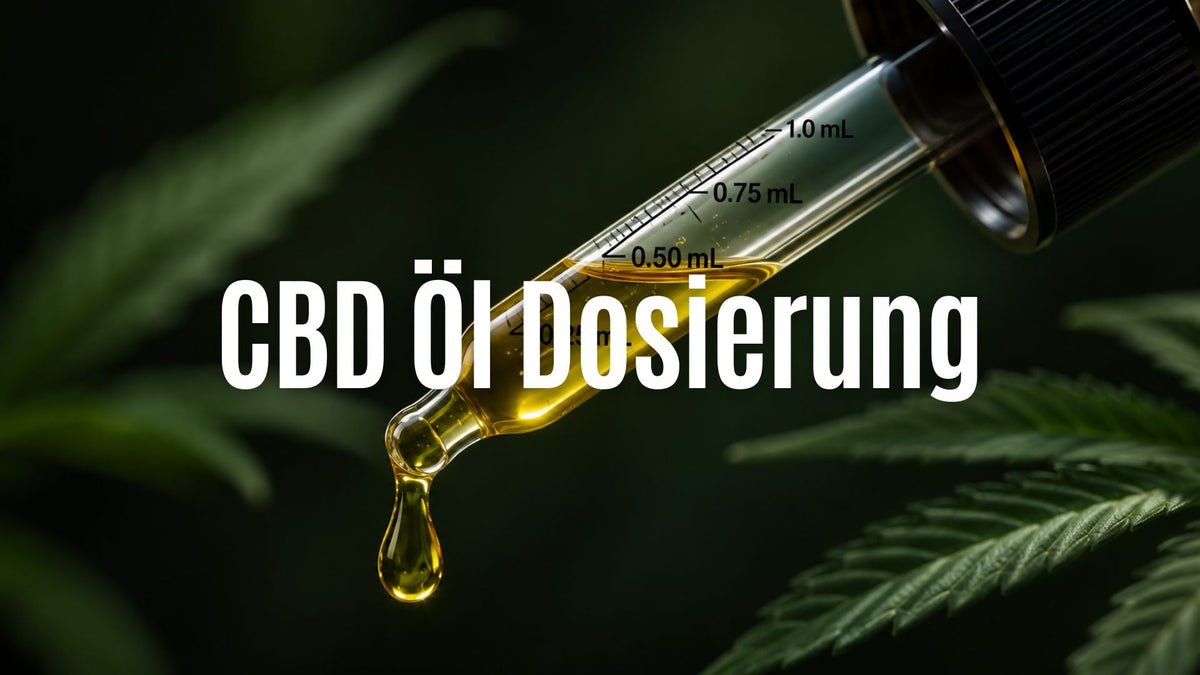
The calculation is as follows: milligrams of CBD in the bottle divided by the drops in the bottle. For the CBD oil 10 percent dosage, this means: a 10% oil in a 10-ml bottle contains about 1,000 mg of CBD, if the proportion per volume is stated. Assuming 20 drops per ml, this results in 200 drops of 5 mg each.
| Concentration | CBD per 10 ml | mg per drop at 20 drops/ml | mg per drop at 25 drops/ml |
|---|---|---|---|
| 5 % | 500 mg | 2.5 mg | 2 mg |
| 10 % | 1,000 mg | 5 mg | 4 mg |
| 20 % | 2,000 mg | 10 mg | 8 mg |
| 30 % | 3,000 mg | 15 mg | 12 mg |
The number of drops per ml depends on the dropper and the oil, so the values are calculation examples. For the CBD oil 5% dosage, this means: two drops provide about 4 to 5 mg. The British food authority FSA equates its 10 mg with 4 to 5 drops of a 5% oil.
With a 30% oil, even a single drop contains 12 to 15 mg. The CBD oil 30% dosage can therefore only be roughly graded in whole drops.
The Body Weight Formula for Individual Dosage
The body weight formula is: body weight in kg times milligrams per kg. Reliable reference values in mg per kg come from authorities and drug approvals.
Reference Values per kg of Body Weight and Day
- 0.0275 mg/kg: provisionally safe amount in food according to the EFSA, about 1.9 mg at 70 kg
- 5 mg/kg: starting dose of the medication Epidyolex according to the EMA prescribing information, only under medical supervision
- 4.3 mg/kg: from here, liver damage is possible after four weeks according to the DFG Senate Commission SKLM (2025)
A calculation example for 70 kg: 4.3 mg times 70 equals around 301 mg per day. Therefore, for self-administered CBD dosage: start at the lower end and maintain a large margin.
Combining Several CBD Products: How to Stay Organized
With several CBD products, the sum of all milligrams swallowed per day counts. This is how the total amount is calculated:
- Drops: number of drops times milligrams per drop.
- Capsules: number of capsules times milligrams according to the label.
- Cosmetics and fragrance oils: do not count, as they are not suitable for consumption according to the German Consumers' Association.
For example: two drops of a 10% oil plus one capsule with 10 mg result in 20 mg of CBD. Bioavailability also fluctuates greatly with the meal, as shown by a 2018 study. Therefore, the sum serves as an overview, not an exact blood level.
CBD Oil Dosage by Application Area
The CBD oil dosage by application area varies greatly because studies test very different amounts. Sleep disorders, anxiety disorders, and pain therapy were investigated, among others. The following values are study data and not recommendations for self-treatment. All tested amounts are far above the EFSA reference value of around 2 mg per day.
The products are neither medications within the meaning of Section 2 of the AMG nor medical devices within the meaning of Regulation (EU) 2017/745, and they are not intended for the diagnosis, treatment, cure, or prevention of diseases.
| Application | Study Amount of CBD | Result |
|---|---|---|
| Sleep | 150 mg, 60 minutes before bedtime (2024) | no difference from placebo in most sleep scores after two weeks |
| Anxiety | 300 mg (single study, according to the 2022 overview) | effect at 300 mg, not at 150 and 600 mg |
| Nerve pain | up to 800 mg daily (2026) | 0.54 points less pain than placebo (scale 0 to 10) |
CBD Oil Dosage for Sleep Disorders
There is no proven standard amount for CBD oil dosage for sleep disorders. A randomized pilot study from 2024 with 30 participants tested 150 mg of CBD, 60 minutes before bedtime. After two weeks, there was no difference from placebo in the severity of insomnia.
The amount of 150 mg of CBD is far above the EFSA reference value of around 2 mg. Those who use CBD drops in the evening should start low and maintain a constant interval from bedtime. For persistent sleep problems, consulting a doctor is the right way. More on timing and limits can be found in the guide to CBD Sleep Drops.
CBD Oil for Anxiety: The Right Dosage
A correct dosage of CBD oil for anxiety has not been scientifically established. Earlier studies reported, according to a 2022 review, a bell-shaped dose-response curve. This means: In animal studies, moderate amounts showed an effect, while low and high amounts did not.
In humans, according to the same review, 300 mg showed an effect in one study, while 150 and 600 mg did not. Later studies did not confirm this. In healthy adults, 100 mg showed no change in anxiety.
Cannabidiol does not act directly on the CB1 receptor of the endocannabinoid system like THC. A 2022 mouse study summarizes laboratory findings: CBD acts as an allosteric modulator that indirectly affects this receptor. In their experiments, the effect on anxiety-like behavior depended on the CB1 receptor. For a diagnosed anxiety disorder, any dosage should be taken under medical supervision.
Dosing CBD oil for pain (including nerve pain)
There is no fixed dosage for CBD oil based on pain severity. Current data comes from a randomized study from 2026 on nerve pain after spinal cord injury. The 40 participants received up to 800 mg of CBD daily, each for six weeks.
In the study by Robertson and colleagues, 38 participants were evaluated. With CBD, pain intensity decreased by 0.54 points on a scale of 0 to 10 compared to placebo. The researchers themselves describe the effect as modest. Side effects occurred in 68.4% under CBD and 52.6% under placebo, almost all of them mild.
No general rule for dosing CBD oil for nerve pain can be derived from this study. Pain therapy with such amounts should be handled by medical professionals.
How to safely increase your CBD oil dosage to 20 mg and more
The CBD oil dosage is increased in small steps, with time allowed for observation. A 2021 medical consensus protocol for pain patients under medical supervision describes this process:
- Start with 5 mg of CBD twice daily.
- Increase by 10 mg every 2 to 3 days.
- The protocol's upper limit is 40 mg per day.
A more cautious case study from the Canadian Pharmaceutical Association starts with 2 mg in the early evening. After that, the amount is increased in 2 mg increments, later every three days.
With the consensus protocol, 20 mg is reached after two to three days. The slower schedule takes around four weeks to reach this. Both schedules come from medical practice; the choice should be made in consultation with a doctor.
Dosage diary: How to find your sweet spot
A dosage diary makes the CBD oil dosage traceable. Four fields are sufficient per entry:
- Date and time of intake
- Dose in mg and number of drops
- Type of application, for example with or without a meal
- Notes on sleep, well-being, and side effects
Consistent documentation over the first month shows how each step works. This allows every step of the CBD drops dosage to be compared with the previous one.
What to do if CBD oil does not work?
If CBD oil shows no effect, it is worth first looking at five typical sources of error:
| Source of error | Solution |
|---|---|
| Counting drops instead of milligrams | Calculate the amount per drop |
| Assessing the effect too early | Peak levels according to the 2018 review occur after 0 to 4 hours, after a high-fat meal, with a median of 10 hours |
| Switching steps too quickly | In the medical pain protocol, each step is maintained for 2 to 3 days |
| Taken sometimes on an empty stomach and sometimes with food | Choose the same time relative to a meal, as food changes bioavailability |
| Irregular application | Record a fixed time in the diary |
| Inaccurate label | Check the batch laboratory report |
Only when milligrams, timing, meals, and the laboratory report have been clarified is it worth carefully increasing the dose. If no effect remains, consulting a doctor is more sensible than always higher amounts of cannabidiol.

Can you overdose on CBD? Safety & Side effects
A CBD overdose in the sense of a harmful amount is possible, even though the active ingredient is considered well-tolerated. The World Health Organization (WHO) describes CBD in its expert report on cannabidiol 2018 as generally well-tolerated. According to SKLM (2025), liver damage is possible from 4.3 mg per kg daily over four weeks.
A review of twelve randomized studies (2022) lists these common side effects:
- Gastrointestinal discomfort at 59.5%
- Drowsiness at 16.7%
- Loss of appetite at 16.5%
- Elevated liver values at 12.8%
- Fatigue at 11.4%
Because fatigue can occur, it is worth looking at the legal situation: Driving after CBD. Reduce the CBD dosage in case of discomfort, and clarify the intake of medications with a doctor beforehand.
Interactions with medications and other preparations
Cannabidiol changes the breakdown of other medications via liver enzymes. According to a 2021 review, CYP3A4 and CYP2C19 break down the active ingredient. At the same time, CBD itself can inhibit enzymes, according to EMA product information, for example CYP2C19.
In the epilepsy medication clobazam, the active metabolite presumably increases by 3 to 4 times according to the EMA. Harvard Health also lists the blood thinner warfarin as a possible serious interaction in 2021.
Interaction warning: Anyone who takes medications regularly should clarify CBD with a doctor or pharmacy beforehand. According to the EFSA, the safety of CBD when taking medications has not been established.
Does the body get used to CBD? Development of tolerance
The WHO found no evidence of dependence on CBD in humans. Case reports of abuse or dependence on pure CBD were not available in 2018. After stopping short-term CBD intake, apparently no withdrawal symptoms occur according to the specialized journal Addiction (2022). Reliable data on tolerance with increasing dosage requirements are not available in the evaluated sources.
If the effect subsides, it is worth first looking at external factors. Typical candidates are a new batch, a different intake time, or a changed meal.
How long does CBD work? (CBD duration of effect)
The duration of CBD's effect depends on the form of intake, meal, and dose. A 2018 review found peak levels in the blood between 0 and 4 hours after intake. With pure CBD drops under the tongue, the peak level was at 2.17 hours. The half-life of CBD (time until half is broken down in the blood) after an oral spray was 1.4 to 10.9 hours.
For swallowed cannabinoid products, the Canadian Pharmaceutical Association lists an onset of effect after 30 minutes to 4 hours. The effect usually lasts 6 to 8 hours, sometimes up to 24 hours. The 2021 medical pain protocol also distributes the daily dose over two intakes.
Legal notices & transparency
This guide is for general information and does not replace medical advice.
Anyone asking whether CBD is legal in Germany needs two answers. According to § 1 Cannabis Consumption Act (KCanG), industrial hemp serves commercial or scientific purposes without recreational intent. It comes from certified EU varieties or contains at most 0.3% THC. Which THC threshold applies is explained in the guide to the THC limit in Germany.
As food, CBD-containing products are not fit for trade according to the Consumer Association (as of March 30, 2026), even as dietary supplements. The reason is the lack of approval as a novel food, which the BVL confirms.
For CANNANA CBD oil: The products come from certified EU industrial hemp and are laboratory tested.
The products are neither medicinal products within the meaning of § 2 AMG nor medical devices within the meaning of Regulation (EU) 2017/745 and are not intended for the diagnosis, treatment, cure, or prevention of diseases.
Conclusion: Finding the right CBD dosage
The right CBD oil dosage starts low, increases slowly, and is calculated in milligrams. A medical pain protocol starts with 5 mg twice daily. The EFSA lists approximately 2 mg per day provisionally for food.
The table, drop calculation, and dosage diary make every application comparable. Anyone who proceeds with patience and consistency can find their personal sweet spot. For medications or illnesses, the dosage should be discussed with a doctor.
The CANNANA team provides honest advice on products and application without technical jargon. Advice is available in the store at Flinger Straße 14, 40213 Düsseldorf, via WhatsApp, or online at CANNANA CBD Oil.
Sources and References
25
Scientific references, official statements, and legal frameworks for this article:
-
WHO: Cannabidiol (CBD) Critical Review Report Official Authority
-
Fachartikel: Cannabidiol (CBD) in Clinical Care Specialist Article
-
BfR: Cannabinoide in CBD-Ölen – wie viel ist enthalten? Official Authority
-
Verbraucherzentrale: CBD-Öl – legal auf dem Markt? Official Body
-
FSA: Cannabidiol (CBD) – Consumer Advice on Daily Intake (10 mg/day) Official Authority
-
Fachartikel: CBD and other medications: Proceed with caution Specialist Article
-
Konsumcannabisgesetz (KCanG) – § 1 Begriffsbestimmungen Law / Regulation
Frequently Asked Questions (FAQ)
How do I dose CBD oil correctly?
How many CBD drops can you take per day?
Why is the optimal CBD oil dosage individual?
Can CBD oil be overdosed?
How many mg of CBD are contained in one drop?
How long do the effects of CBD oil last?
What CBD dose is suitable for sleep, anxiety, or pain?
This article is provided for general informational purposes only and does not constitute legal, tax or medical advice. For individual questions, please consult a qualified professional. Laws and regulations may change – please always check the currently applicable legal requirements.