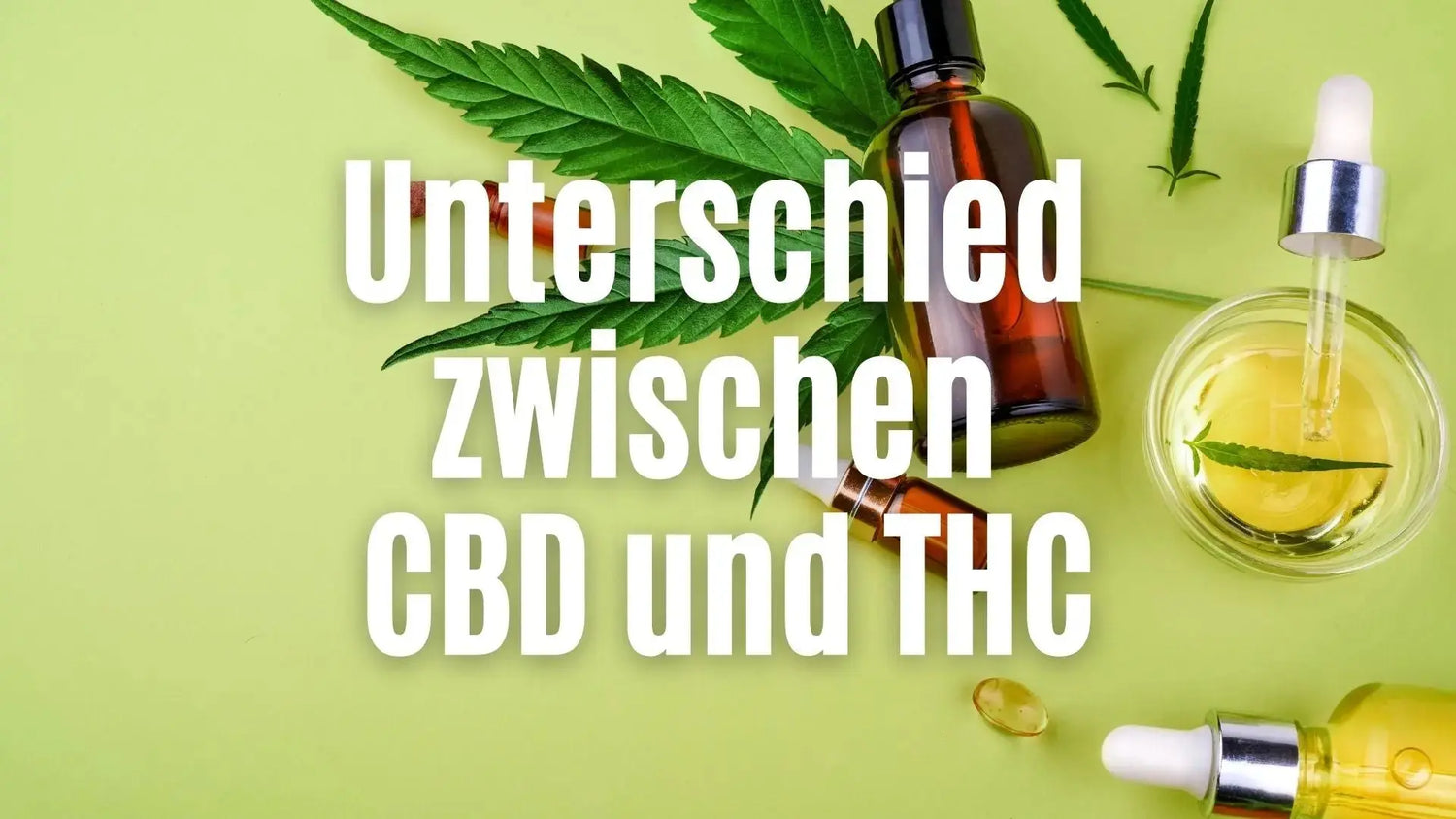

What is the difference between CBD and THC? CBD is a cannabinoid from the cannabis plant that is not intoxicating. THC is also a cannabinoid, but that is exactly the substance responsible for the typical high. So the most important difference is simple: THC alters consciousness, CBD does not. Therefore, CBD usually does not get you high. Many people confuse the two because both come from cannabis, often appear in similar products, and terms like hemp, cannabis, CBD, and THC are constantly thrown around in everyday life. This is precisely where the confusion often arises.
Many people ask themselves this very question for the first time when they encounter CBD oil, cannabis flowers, vape products, or medical cannabis. And to be fair: The confusion is understandable. Both substances come from the same plant. Both have similar names. Both belong to the same family of active ingredients. But their effects on your daily life are completely different.


Those searching for "difference CBD and THC," "CBD vs THC," or "CBD or THC" usually don't want a biochemistry lecture. They want a clear answer. So here it is in one sentence: THC is the intoxicating part of cannabis, CBD is the non-intoxicating part. And it is precisely this cannabinoid difference that determines whether a product is more associated with intoxication or with everyday usability.es in the CANNANA shop and get the new vape experience – clean, smart, and ready for 2026.
CBD and THC: What they have in common
CBD and THC initially have more in common than many people think. Both come from the cannabis plant. Both belong to the group of cannabinoids. And both interact with the body's own system through which cannabinoids exert their effects. Furthermore, THC and CBD are among the best-known and most important cannabinoids of all.
This commonality is why many people lump them together. When a product says "cannabis" or "hemp," it sounds like the same thing to newcomers. In addition, products are often marketed visually similarly: oils, flowers, vapes, extracts. Those new to the topic quickly think: "It's all the same." It's not.

The crucial difference between CBD and THC
The main difference between CBD and THC is not the plant, but the effect on the mind. THC is psychoactive. This means it can noticeably alter perception, mood, and consciousness. CBD, on the other hand, is not intoxicating or non-intoxicating. So it does not produce the typical high often associated with cannabis.
If you want it as simple as possible, remember this:
- THC effect: can get you high
- CBD effect: usually does not get you high
- Both: come from cannabis
- But: they are not functionally the same
This is precisely why the question "What is CBD?" is not automatically answered with "What is THC?". Those who buy CBD are often specifically not looking for an intoxicating experience. Those who specifically mean THC are often looking for precisely this psychoactive effect or are operating in a medical context. These are two completely different sets of expectations.
If you are specifically looking for non-intoxicating products, our CBD flowers or CBD oil are a good starting point.

THC Effect: Why it gets you high
THC is the substance that causes the classic cannabis high. According to MedlinePlus, THC acts on the brain and causes brain cells to release dopamine. This signal is associated with pleasant feelings, relaxation, and the typical "I'm high" effect. At the same time, perception, concentration, coordination, and judgment can also be affected.
This is why THC is deliberately sought out by many consumers. For some, euphoria is paramount. For others, relaxation, more intense music perception, or altered sensory experiences. But one should be honest here: the same psychoactive effect that some find appealing can also be unpleasant for others, for example, through uncertainty, anxiety, or overwhelm.
This is also why THC plays a completely different role in everyday life than CBD. Those who consume THC should not act as if it is neutral for attention, reaction time, or clear decisions. It is not a "normal wellness molecule," but the intoxicating main active ingredient of cannabis.

CBD Effect: What it can do – and what it can't
The most important answer to the question "Does CBD get you high?" is: No, CBD does not cause a typical high like THC, according to current knowledge. This is precisely why CBD is interesting for many people in the first place. It is mostly associated with a more relaxed, sober approach to cannabis topics – without the loss of control or the significant alteration of consciousness that can be associated with THC.
Nevertheless, CBD should not be romanticized. CBD is not automatically harmless just because it is not intoxicating. The NCCIH points out that CBD can have side effects, including fatigue, changes in attention, gastrointestinal issues, interactions with medications, and potential burdens on the liver, for example.
It is also important: Not every freely available CBD product automatically delivers what the label promises. According to the NCCIH, CBD products may contain more or less CBD than stated and sometimes also show THC contamination. This is precisely why misunderstandings constantly arise in the market – and precisely why quality matters more than hype.
So the honest assessment is: CBD's effect is often associated with calm, balance, and well-being. But CBD is not a miracle cure, not a free pass, and not a substitute for proper product testing. Anyone who speaks seriously about CBD must also say exactly that.

CBD vs. THC: Legality, Everyday Use, and Application
When it comes to CBD vs THC, the legal situation quickly becomes confusing. For Germany, the following applies: Non-medical cannabis with THC is not simply "free" for adults, but has been partially legalized or decriminalized under certain limits since 2024. The Federal Ministry of Health mentions, among other things, possession of up to 25 grams on the go, up to 50 grams at home, and private cultivation of up to three cannabis plants per adult.
For everyday life, this means: THC is a completely different field legally and practically than CBD. THC is more strongly regulated due to its intoxicating effect, more sensitive in traffic, more relevant for youth protection, and significantly closer to questions of responsible consumption. CBD, on the other hand, fits more into the "no high, but consciously selected product" category for many.
However, the situation with CBD is also not as simple as social media often portrays it. Especially for foods and dietary supplements, the legal situation is complex. The BVL explains that it is currently not aware of any circumstances under which CBD in foods or dietary supplements would be marketable. The EFSA also treats CBD as a Novel Food and continues to emphasize existing data gaps regarding safety.
Translated into plain language: With THC, the intoxicating effect is the central issue. With CBD, it is often the product category that makes the legal difference. This is precisely why it is not enough to just look at "legal" or "not legal." You always have to ask: Which product? Which form? Which declaration? Which quality?
If you are deliberately looking for products that are not designed for a psychoactive effect, many tend to look at categories such as CBD oil or CBD flowers instead of THC-related products.

Who is CBD interesting for – and when does THC play a role?
CBD is typically interesting for people who are curious about cannabinoids but don't want a high. So for beginners. For people who are curious about cannabis components without seeking a psychoactive effect. Or for people who want to consciously differentiate between "suitable for everyday use" and "intoxicating" when making a purchase decision.
THC plays a role when someone specifically means the psychoactive effect or is operating in the context of medical cannabis. This is a different use case, a different expectation, and a different responsibility. This is where the core of CBD or THC lies: it's not about what's "better." It's about what you're actually looking for.
For maximum clarity, you can follow a simple guiding question:
Do you want a high? If the answer is no, you are mentally very likely closer to CBD than to THC.
If the answer is yes or you specifically mean the psychoactive effect, then it's about THC – and thus automatically about a different legal and practical playing field.
 Discover CBD flowers and CBD oil
Expert opinion from CANNANA
At CANNANA, we see every day how often CBD and THC are confused. And honestly: The problem is rarely a lack of interest – but poor education.
CANNANA is not a manufacturer, but a specialized retailer with a clear selection philosophy. For us, this means: We don't just include everything that's currently loud in our assortment, but only products that truly convince us in terms of quality, experience, and trust.
Before a product lands with us, we take a close look. We check whether it works cleanly, whether it is comprehensibly presented, and whether it matches what customers are really looking for today: clarity instead of chaos, quality instead of cheap hype, trust instead of empty promises.
This is precisely our claim. Not to promise more than a product can deliver. But also not less. Because especially in the CBD sector, a careful selection decides whether a product ultimately convinces or just looks like a trend.


Conclusion: CBD and THC are not the same – and that's exactly what matters
Ultimately, the difference between CBD and THC is much simpler than it is often portrayed online: Both come from cannabis, but they don't have the same effects. THC is psychoactive and gets you high. CBD is not intoxicating and is precisely why many people classify it very differently.
The crucial point for your purchase decision is therefore not whether both come from the same plant. The crucial point is what you want. If you are not looking for an intoxicating effect, you should never equate THC and CBD. If you are looking for orientation instead of buzzwords, then remember this sentence: CBD and THC are not the same – and that's precisely why the difference makes all the difference.